Reading Material: Disability activist Christopher Alvarez on NYC, Throne, and why different is beautiful
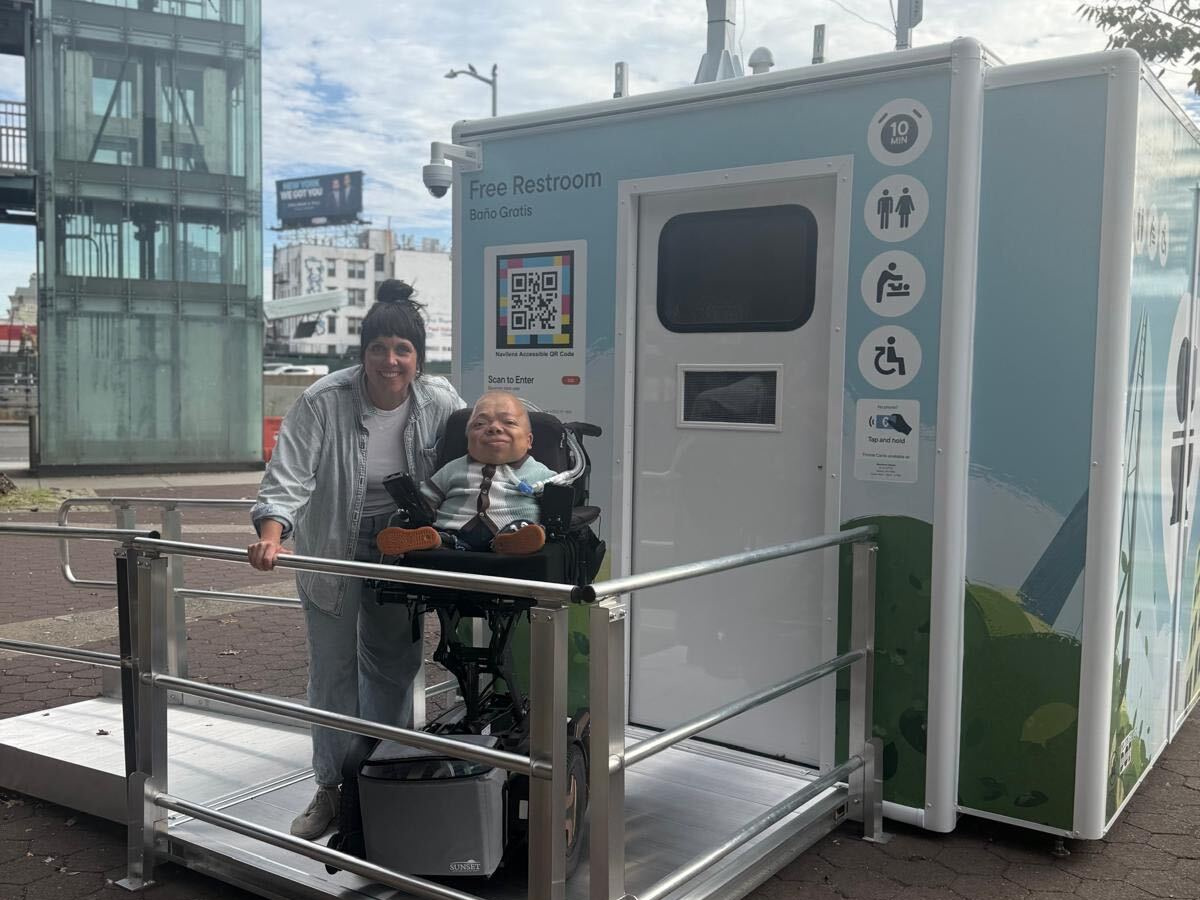
At Throne, we believe that building bathrooms for everyone means inviting the disability community into the conversation from day one.
Our team recently connected with Christopher Alvarez, a journalist, filmmaker, and disability activist based in Queens, New York. In September, we launched the first Throne units in NYC across Queens, Harlem, and The Bronx – and Alvarez had the chance to put one of our brand new units to the test.
Our co-founder and chief operating officer, Jessica Heinzelman, sat down with Alvarez to chat about his unique perspective on moving through the city with a disability and how growing up in La Pequeña Colombia shaped his sunny outlook on the world.
Can you tell us a bit about yourself and what it’s like where you live?
“I am a 29-year-old, trapped in a nine-month-old’s body. I was born to a Hispanic couple from Colombia. When I was two years old, I was diagnosed with Thanatophoric Dysplasia Type 2, a severe skeletal disorder in which the person affected has a narrow chest, a small ribcage, small limbs and underdeveloped lungs. Children born with this condition die soon after birth due to respiratory failure. Currently, I am the only one in the world with my disability, breaking the lifetime expectancy record with ventilator support via tracheostomy.
I often like to say that even though I have small limbs and no bones, I still got everything, and by ‘the thing,’ I mean the mindset. Growing up in ‘The World’s Borough,’ Queens, ‘La Pequeña Colombia,’ has taught me to love my roots and embrace every single person that I cross paths with because no matter how big or small the moment is, smiling together is a blessing.”
How has being part of the disability community shaped your life?
“It sounds cliché but being counted out and being looked down upon has only added motivation to show the naysayers that I am more than just my wheelchair. Physical challenges have shaped the way I communicate with the world around me. My partial hearing loss would make some conversations difficult and my tracheostomy causes my voice to be rough. But through the years, I have constantly worked on improving my speech, by speaking in public and engaging in conversations. My listening skills have also improved with the help of hearing aids.
My own struggles with communication, and a lifetime of conveying my story in a way that people understand and are inspired by, have been a driving force as I show my worth. Through the years I’ve seen the power of visualization – changing the NOs to YES, the can’ts to cans, ‘I don’t know’ to ‘I will learn’ and asking ‘why not’ instead of ‘why.’ If you could dream it, you could see it into existence.”
—--
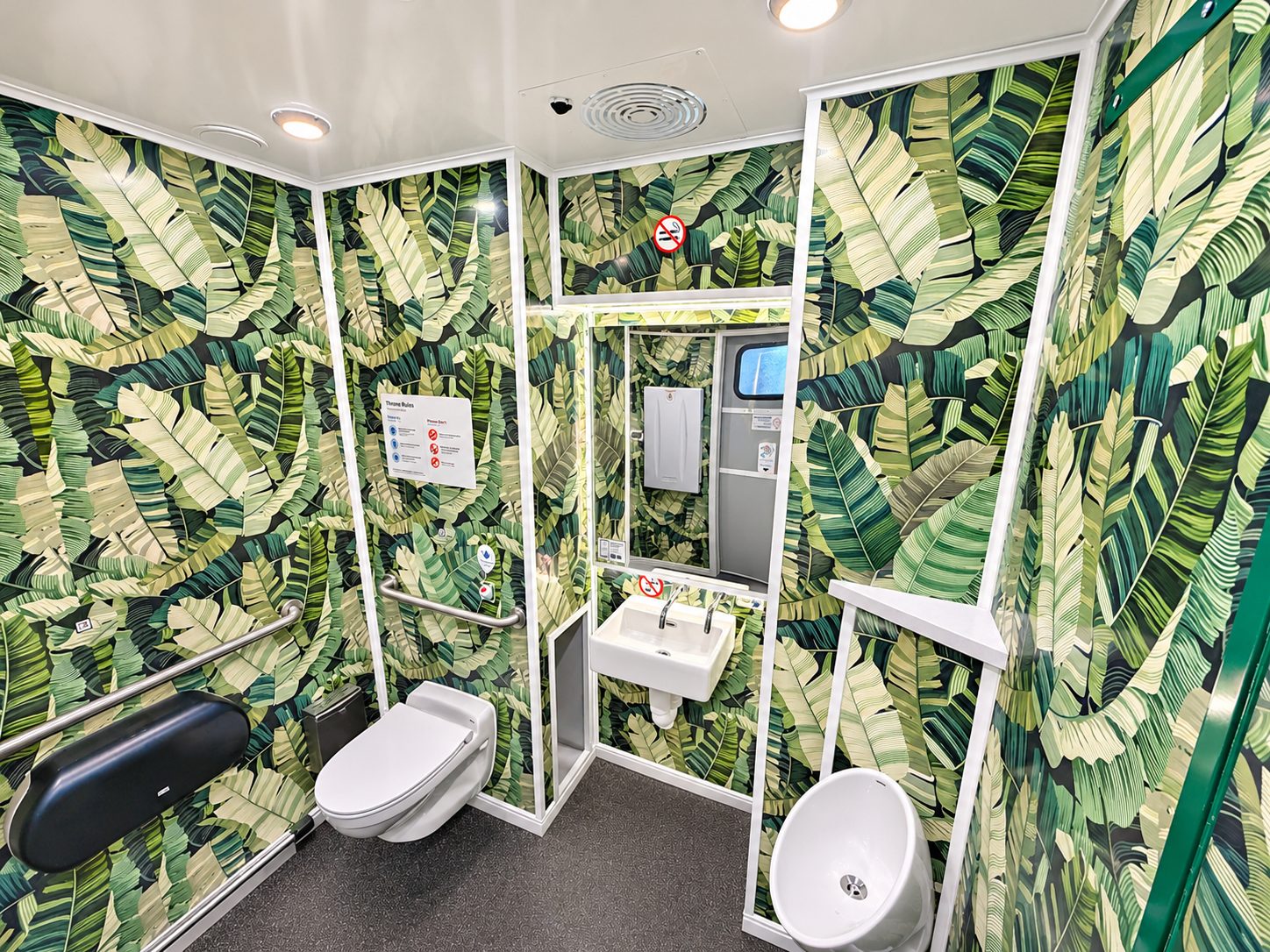
Earlier this month, Alvarez explored his experience using a Throne for Able News, a monthly publication focused on issues that impact people with disabilities. While no restroom solution is perfect, including ours, our brand-new New York City Thrones earned high marks.
“Aside from the sensor to open the door being a little too high for me, it was everything I could ask for in terms of bathroom availability and accessibility,” Alvarez told Throne. Unlike other public restrooms, the Throne made it possible for him to use the urinal independently and even to spin in a full 360 with his wheelchair – a first in a public bathroom.
Alvarez observed that wide spaces with lowered toilets, sinks, and urinals make bathrooms work for wheelchair users like him. Restrooms that incorporate “as much technology as possible” – features like automatic doors and other motion sensors that don’t rely on physical pressure – can also make spaces more inclusive.
Going further, Alvarez suggested that adult rolling toilet chairs make bathrooms more accessible for disabled people who need help with balance to safely use a toilet. He also pointed to universal changing tables, which are height-adjustable and larger than traditional baby changing stations to accommodate people who can’t safely use standard ADA-compliant restrooms.
Beyond specific features, more restroom access can be a big deal for people with disabilities in ways that aren’t always obvious. “Most of my nurses and family members are considered seniors and that means more bathroom breaks, which is more time that I am pulled out of society and isolated from a world that already shuts me out, because we are looking for a restroom,” Alvarez said. “Urgent urges and frustration often lead to going back home due to the lack of free, public bathrooms.”
That story – how a lack of restroom access silently locks people out of public life – is one we hear often from our users. For people with disabilities, public restrooms can be a lifeline to participating in activities like work, shopping, travel, and community events that many people take for granted.
“We are not sick, we are not broken,” Alvarez said. “We are all different and we do things differently. Different is beautiful and we are all beautiful in our way. Each day we are defying the odds and each day we are showing why we should be at the decision-making table.”
To learn more about Throne’s accessible features and how public restroom access affects the disability community, read our recent interview with the American Association of People with Disabilities (AAPD). Want a Throne where you live? Check out our resident’s playbook for help asking local leaders to consider Throne.