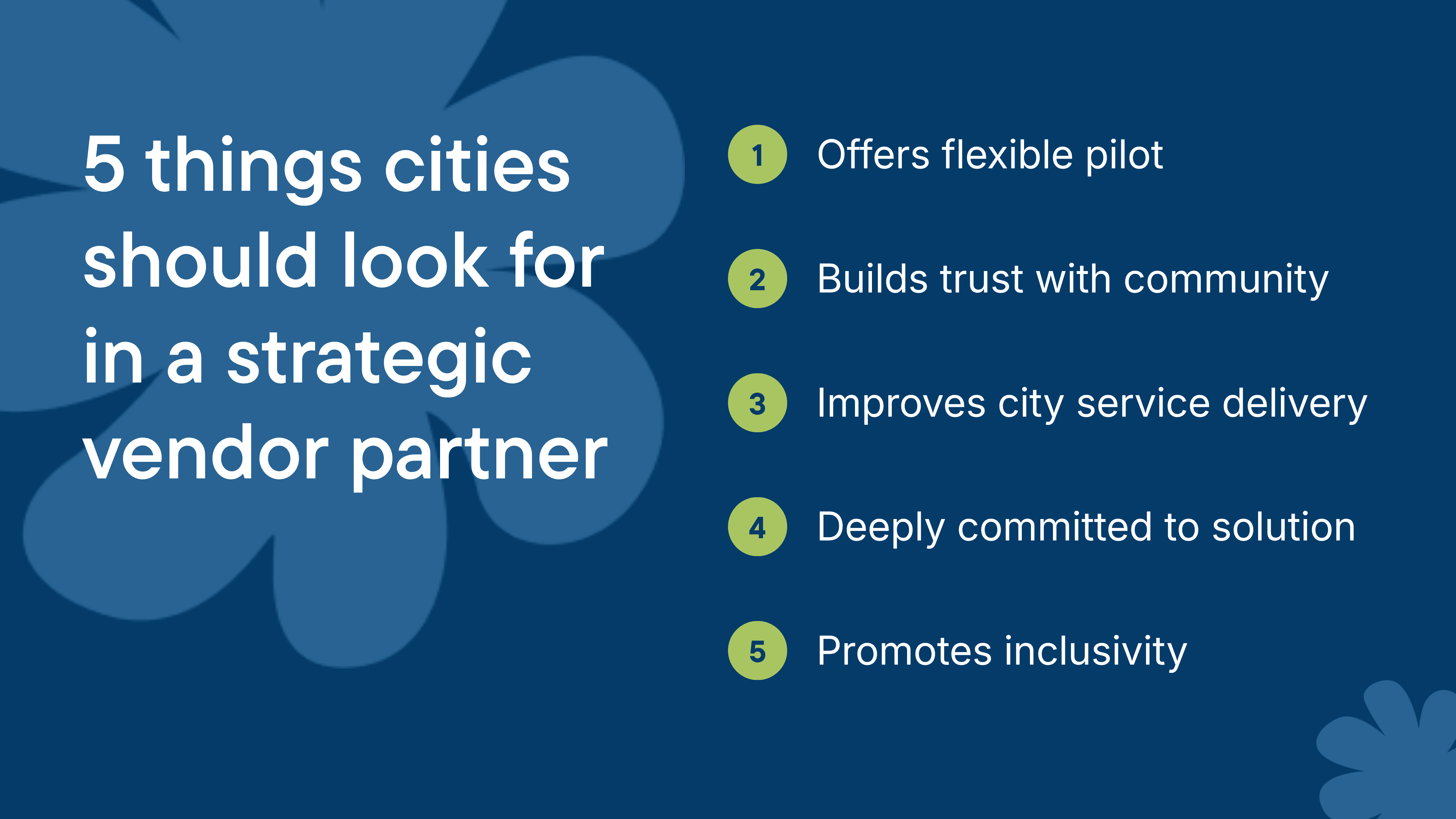
5 things cities should look for in a strategic vendor partner
Written by: Beth D'Arcy
Cities are re-thinking how to modernize – and who to partner with to make it happen.
There’s a lot to consider when looking for solutions to complex smart-city challenges.
Any credible vendor can tick procurement boxes, but what separates a vendor from a true strategic partner is a willingness to roll up their sleeves and tackle the hard work right alongside city staff.
Vendor partners come to the table with fresh ideas, a proven strategy, actionable data, and an eagerness to help your team reimagine what’s possible. Below, we break down six things to look for in a strategic partner, starting with why a vendor’s approach to data is the clearest signal of all.
Modern cities run on data – and strategy
“What cities are looking for right now is the ability to actually leverage data to make decisions. A lot of existing infrastructure does not have the ability to capture data, and if you cannot capture data, then you're making decisions based on anecdotal feedback from constituents, which is still important, but smart cities are looking for a balanced mix of both qualitative and quantitative data. That’s the direction vendors should be moving – to provide data that enables cities to use resources to the best of their ability. ” - Natasha Shikari, Account Management Architect at Throne Labs
Every smart-city initiative needs data. Modernizing aging infrastructure hinges on real-time visibility into the built environment. Human-centered service delivery relies on performance data and resident feedback. Strengthening community resilience requires insight into the health of public assets.
Without access to data, cities risk making blind or ineffective decisions. Many vendors supply data, but few collect data that’s actually actionable and relevant. Even fewer share it freely or guide cities through what the data means and how to use it.
Strategic partners approach data… well, strategically. They make sure cities access the right data and ask the right questions of that data. To them, data is just as much the product as the infrastructure or interface. It’s valuable intelligence meant to help cities measure the true scale of a problem, right-size responses, and verify when solutions are working.
When data is embedded into a vendor’s approach, service delivery model, and product, you know you’re on the right track. Here are a few other qualities to look for in a strategic vendor partner:
What cities should look for in a strategic vendor partnership
1. Offers a flexible, no-commitment pilot
Investment decisions, especially about the built environment, are some of the hardest a city makes. Leaders think about when to replace facilities, where to site new ones, and which projects can wait another year. There’s rarely a low-stakes way to test the risks of a capital investment before committing to it.
Few vendors offer pilots for capital projects, but when they do, cities can try out solutions before making significant investments. Good pilots collect data and public feedback to test how a community responds to a solution. The insights inform planning, justifies further funding, and identifies the right service tier. It’s a great way for cities to quickly deploy solutions while testing the waters.
"We're okay with not being the right solution. If you do a pilot and this isn't helping you address the problem, the best part about it is that you don't have to commit to it forever." —Natasha Shikari, Account Management Architect at Throne Labs
2. Builds trust with residents and staff
“We've always found that going through hard times and being transparent about it always builds a stronger relationship with our city partners.” - Ben Clark, Co-founder and VP of Hardware, Throne Labs
Cities build trust with residents in the small, everyday encounters with city services: clean restrooms, a working website, or a returned phone call. Responsive service signals the city is paying attention, values its residents, and uses taxpayer dollars responsibly.
But when vendors operate services on behalf of cities, there’s always a risk cities lose control of the resident experience. In the eyes of a resident, slow responses, unanswered complaints, and poor user design fall on the city, not the vendor they’ve contracted with.
Strategic partners intentionally open two-way communication with both residents and city staff. They use feedback gathered through resident surveys, in-person interactions, and regular performance reviews to improve service delivery and adapt services to meet the needs of the community over time.
3. Improves city service delivery in multiple ways
Service delivery usually gets measured in easily quantifiable ways, such as uptime, service frequency, response windows, or cost per unit. Strategic partners pay attention to those metrics, but also to what’s harder to measure.
Things like whether residents feel safe using the service, if they'd use it again, and if it's reaching the people who need it most are just as important to improving service delivery.
The results show up in resident complaints going down, staff time shifting to higher-value work, and budget moving to high-need areas. Partners improve service delivery in ways that may not make it to the report.
4. Deeply committed to solving the problem
Plenty of vendors build products to solve city problems, but you know you’ve found a strategic partner when their mission shows up in everything they do. It’s apparent in how they deliver services, what data they collect, and where they’re making investments.
Strategic partners dedicate years to understanding the problem and refining their solution to solve it more effectively. Their commitment sustains momentum through leadership changes, staff turnover, or changing priorities. A partner invested in the city’s shared problem keeps transformation moving forward, no matter what.
5. Promotes inclusivity
Strategic partners operate through the lens of inclusivity. They ask themselves questions like:
- Who might find difficulty with this?
- Who’s missing from the room and how do I bring them in?
- If someone can’t see this feature, can they hear it? If they can’t hear it, can they see it?
The answers influence everything from product design and the business model to the data they collect and the recommendations they bring to the table. They listen to the community and consult people with lived experience so their solution can be more inclusive. The result is a more impactful solution that delivers value to the entire community.
Strong, trusted partnerships lead to lasting solutions
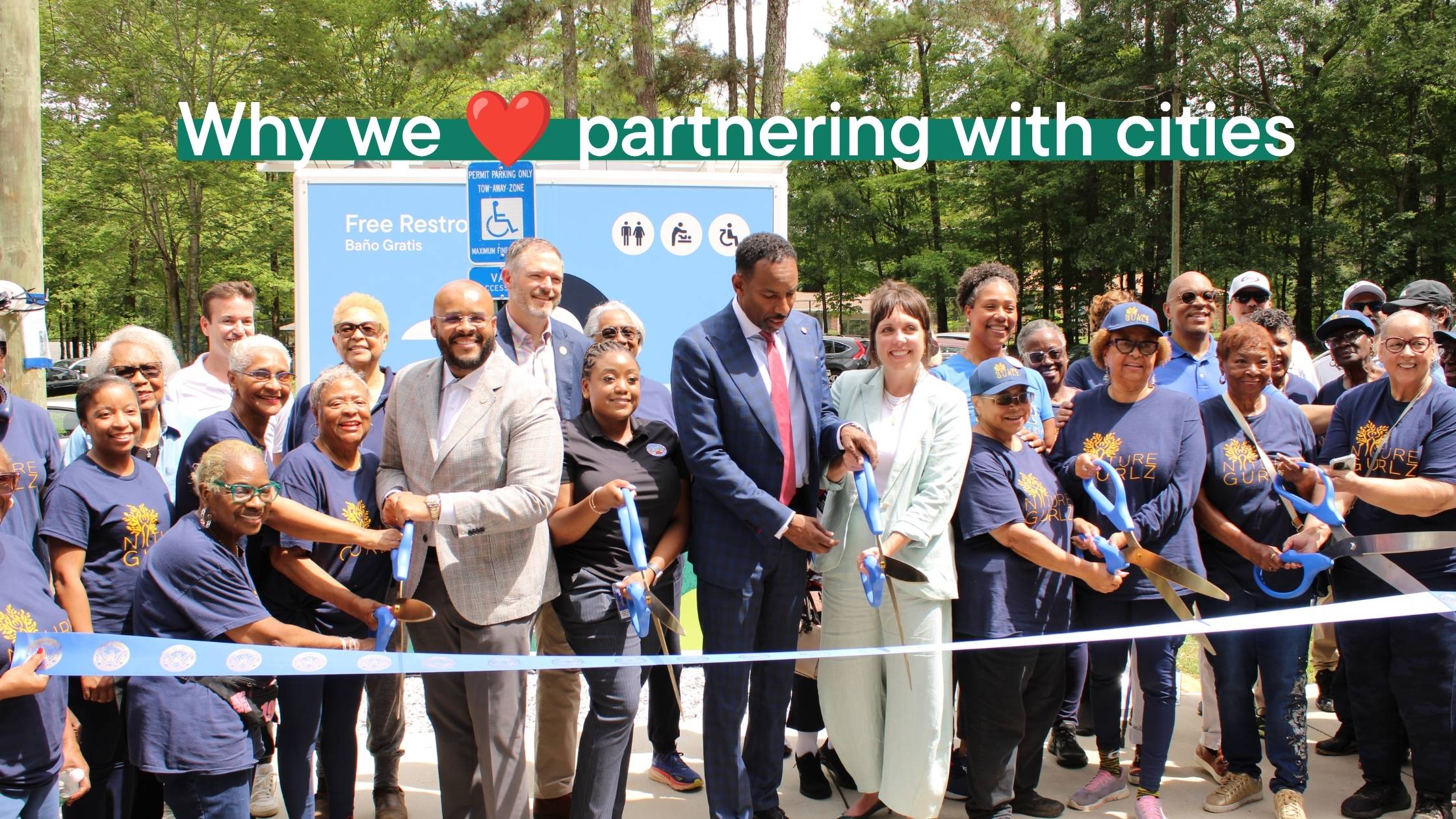
With a little data and a lot of heart, cities and vendor partners can make a lasting impact together. At Throne Labs, we love partnering with cities. Read on to find out why.
Join us in expanding restroom access
Blog & Resources