How we use data to keep Thrones sparkling clean

Written by: Jessica Heinzelman, Co-Founder & COO at Throne Labs
For decades, cities have approached public restroom maintenance the same way: send someone to clean on a fixed schedule (once in the morning, maybe once in the afternoon) and hope nothing goes wrong in between. When something does go wrong, there's rarely a way for the public to report it. Who's going to spend 20 minutes tracking down a facility manager to report a clogged toilet or an empty paper towel dispenser?
The result? Public restrooms that swing wildly between acceptable and unusable, with no real visibility into what's happening between scheduled cleanings. It's an approach that wastes resources, frustrates users, and reinforces the perception that public restrooms will always be gross.
At Throne, we've built a fundamentally different system, one that uses real-time data to ensure our restrooms stay consistently clean and fully stocked, not just twice a day, but throughout the day, and gives the community agency to report issues and see results.
Step 1: We ask for a cleanliness rating

Every time someone uses a Throne, we ask them for a cleanliness rating. It takes less than a second. About one-third of users provide feedback and a rating, which gives us an enormous dataset to work with. Unlike traditional restrooms where problems go unreported for hours, we know within minutes when something needs attention.
But collecting data is only half the equation. The real innovation is how we use it.
Step 2: We use the data to recommend cleaning routes
When a Throne Operations Specialist completes a clean and logs it in our staff app, our proprietary algorithm immediately calculates which restroom needs attention next. It weighs four critical factors:
- Number of uses since last clean. High-traffic locations naturally need more frequent service than quieter locations. We know when the danger zone is approaching and get ahead of it.
- Recent cleanliness ratings. If multiple users report declining conditions, that Throne jumps up in the queue even if it was just cleaned.
- Velocity of use. Our system analyzes real-time activity, especially increased usage, to predict when a restroom will need attention before problems arise and prioritize cleans that will create the most delight.
- Geographic routing. When creating cleaning routes, the algorithm recommends Thrones primarily based on our Operations Specialists’ locations and considers factors such as travel time as well as current cleanliness ratings.
This isn't just smarter; it's radically more cost-effective. Instead of sending staff to every location on a rigid schedule regardless of actual need, we deploy resources where and when they're needed most.
Step 3: Our local crew cleans and repairs with love
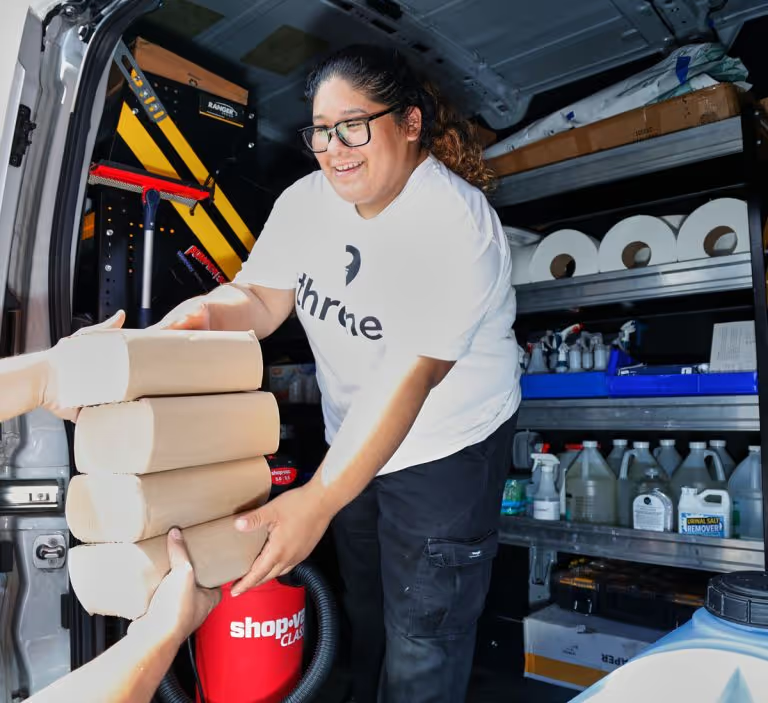
Our Operations Specialists are the heart of the Throne system. We've built a committed team that shares our mission to provide delightfully clean restrooms for everyone. Starting as dedicated cleaners, they're cross-trained in basic plumbing and technical troubleshooting, allowing them to address most issues on the spot. For those inclined toward the technical side, there's a clear growth path to full Technician roles.
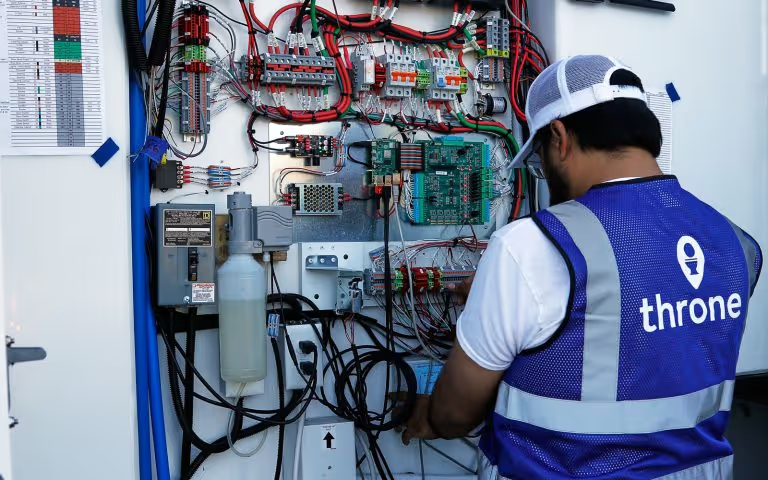
This investment in our workforce creates a virtuous cycle: our team takes genuine pride in their work because they see the direct impact and hear about it from grateful users. That pride translates into the quality and responsiveness that keeps our national cleanliness rating at 4.3 out of 5 stars.
The result: A new standard for public restrooms
The numbers tell the story. Across our national network, Throne maintains a 4.3 out of 5-star average cleanliness rating. We're cleaning approximately every 12 uses, far more responsive than traditional fixed schedules, yet more efficient because we're not over-servicing locations that don't need it.
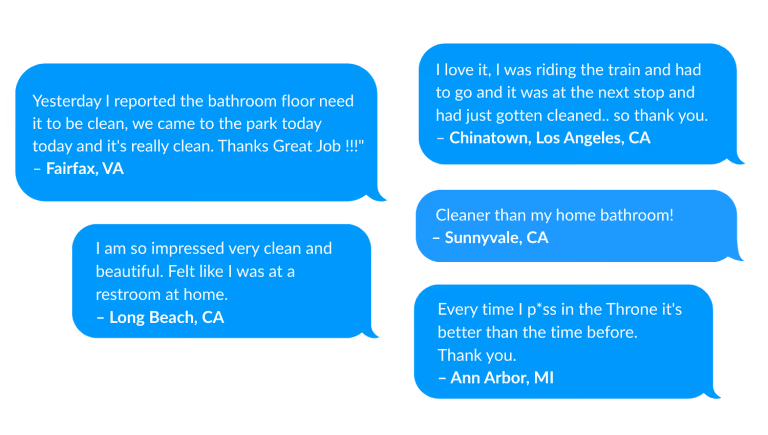
Users notice the difference immediately. These are just a few examples of real-world comments from users:
But don't just take our word for it. In Long Beach, where the city recently extended its pilot program after strong community response, local news captured the real-world impact of data-driven restroom maintenance. Watch city staff and beach visitors share their experience with Throne's approach on Spectrum News 1.
Throne: Changing the equation for cities
For city leaders, the math is compelling. Data-driven cleaning means you're not paying for unnecessary service calls to low-traffic locations while high-traffic restrooms deteriorate between scheduled cleanings. You're allocating resources based on actual need, which means better outcomes at lower cost.
More importantly, you're providing a public amenity that residents actually use and appreciate, one that becomes a genuine community resource rather than a problem to manage.
Traditional public restrooms have conditioned us to expect the worst. Throne's data-driven approach proves there's a better way.