How do you stop misuse of public restrooms when no one’s watching?
Written by: Beth D'Arcy
Public restrooms are private by design, but it’s also what makes them vandalism targets. Dark corners, hidden entrances, and few windows give excellent coverage for bad behavior.
Unlike other public spaces, cities can’t rely on cameras to deter misuse or monitor the area, and most can’t afford full‑time attendants to keep watch.
So how do cities keep people accountable in a space where, by design, no one is watching?
Since deploying smart public restrooms across 100+ locations, we’ve learned what it takes to keep people accountable in public restrooms. It’s a combination of systems, design, and friction that’ll influence human behavior, reduce the appeal of vandalism, and stop bad acts from happening in the first place.
The challenge of keeping people accountable in public restrooms
"Part of the challenge of managing public restrooms is that they are fundamentally private spaces. You can't have cameras. You're kind of flying blind. People who are inside don't necessarily feel like they are going to be held accountable." —Jess Heinzelman, Co-founder & COO, Throne Labs
Let’s be clear – most people who use public restrooms don’t abuse them. They use the toilet, wash their hands, or touch up their appearance. The few causing trouble do so because they see an opportunity in a place where no one will stop them.

There are also conditions that invite and perpetuate bad behavior, like blank walls, low lighting, and broken fixtures. For cities managing hundreds of facilities, this can be a never ending misuse-to-repair cycle that’s impossible to break. It’s what makes public restroom management so challenging.
It’s not practical for most cities to hire restroom attendants to monitor and maintain each facility. Most don’t even have dedicated line items for restroom maintenance. But there are strategies that can make vandalism less appealing in the first place – and keep restroom users accountable to the rules.
Continue reading: Do you know the real cost of a public restroom? Most cities don’t
Ways to reduce vandalism in public restrooms
1. Make mischief feel out of place
If privacy and dark corners encourage vandalism, the fix is to take that cover away. When a space is well-lit, clean, and cared for, bad behavior starts to feel out of place – and some people won’t attempt it.
.jpg)
Things that make discourage vandalism:
- Good lighting. Bright and prominent lighting makes corners and hidden areas less appealing for people looking to conceal themselves.
- Clear visibility. Open sightlines to high-traffic public areas increases the potential of being seen.
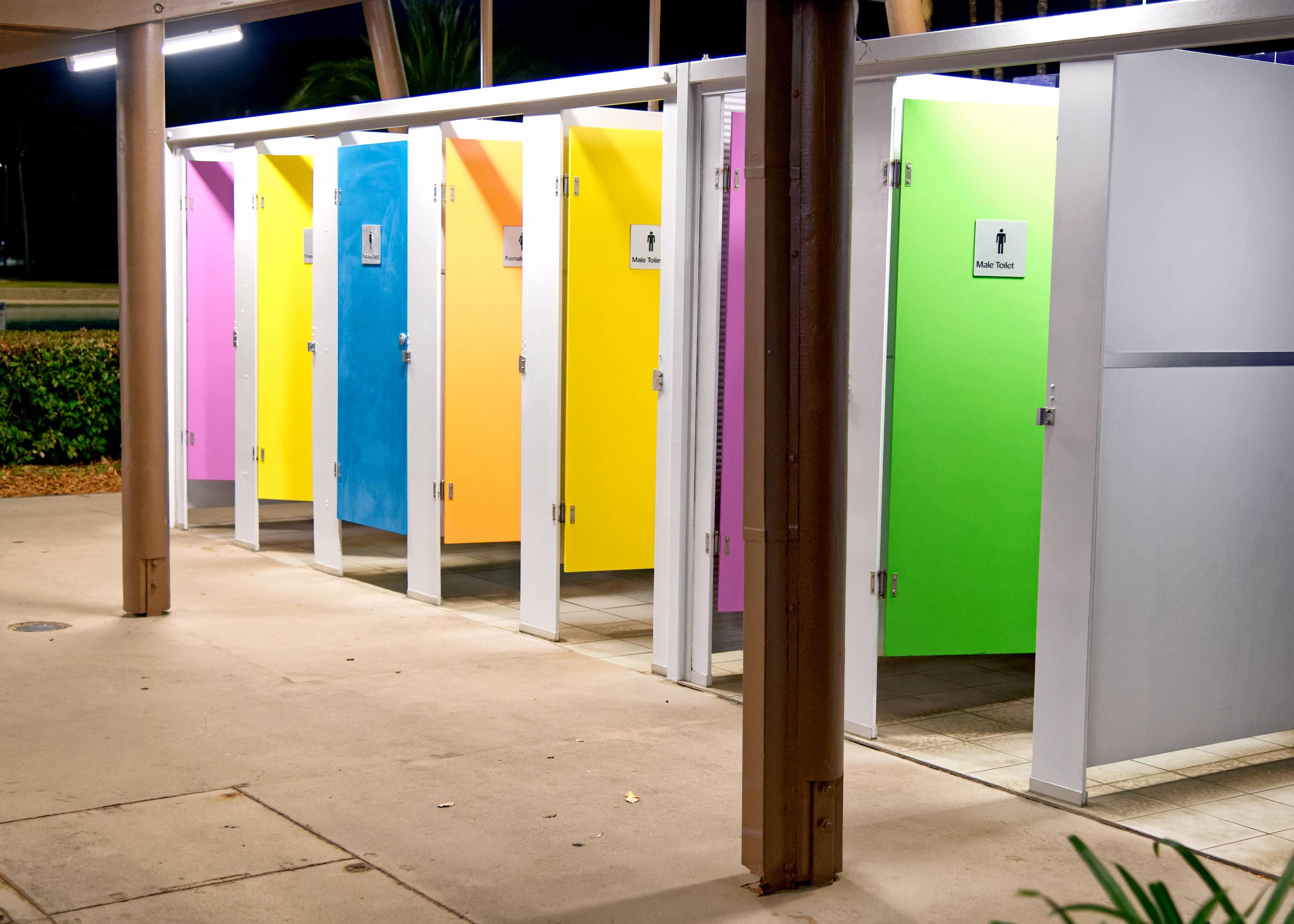
- Murals and art. Busy, colorful murals hide tags and graffiti signatures, which defeats the point for most taggers.
- Overhead music. Calm, ambient music subconsciously reduces stress and discourages loitering.
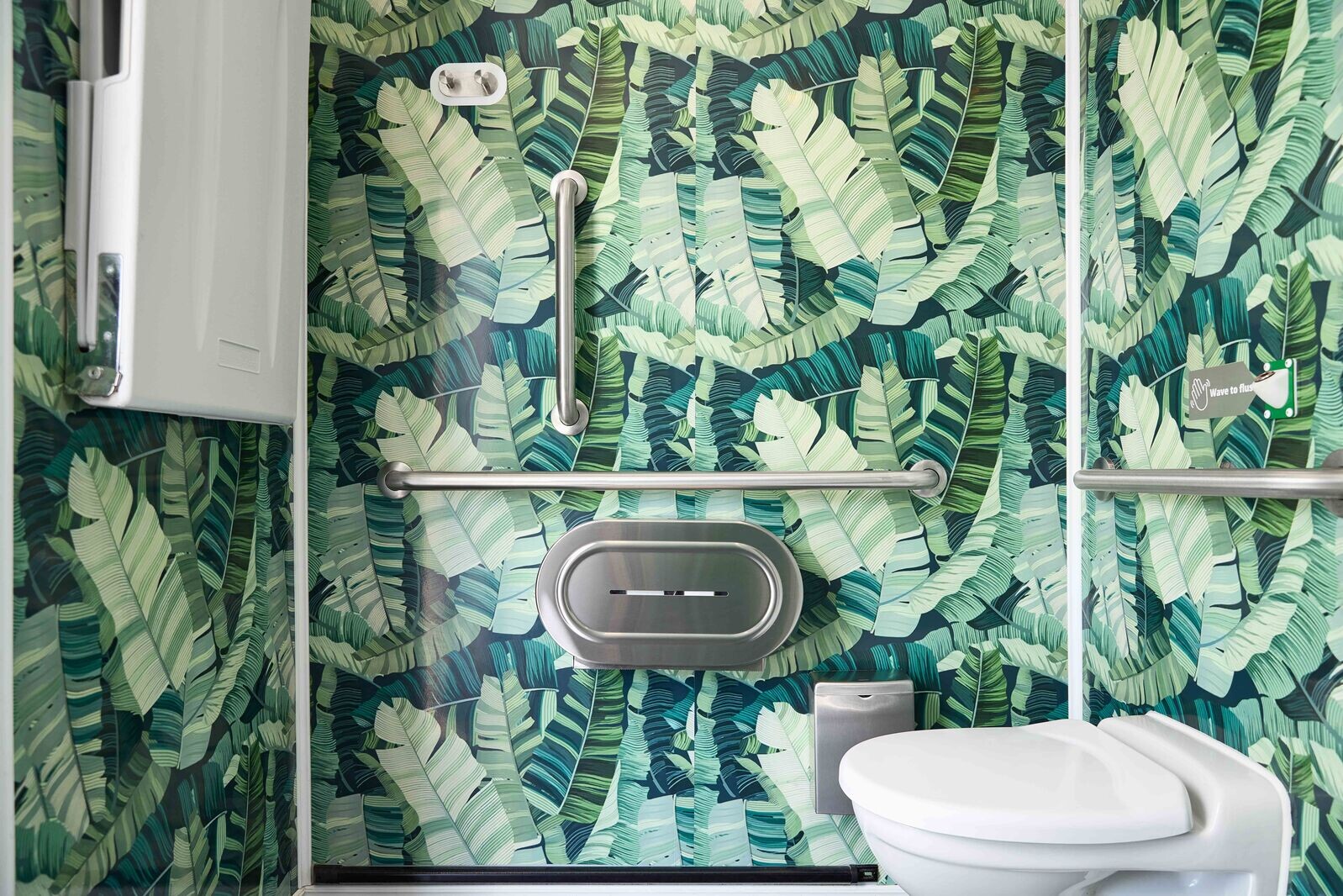
- Durable, but nice, fixtures. Quality finishes hold up to heavy use and make it harder to deface.
Continue reading: Why nicer restrooms get vandalized less
2. Prioritize routine maintenance and quick repairs
"That's usually where we see public restrooms go downhill – it's not that the facilities aren't being cleaned, it's that they’re not being cleaned enough based on the use." —Casey Shea, Los Angeles Operations Manager, Throne Labs
Regular cleaning and quick repairs go a long way to breaking the cycle of misuse. When damage lingers, it signals that no one is paying attention and invites further destruction. Cities with dedicated line items for restroom maintenance can consistently monitor each facility and identify new issues quickly before they become bigger problems.
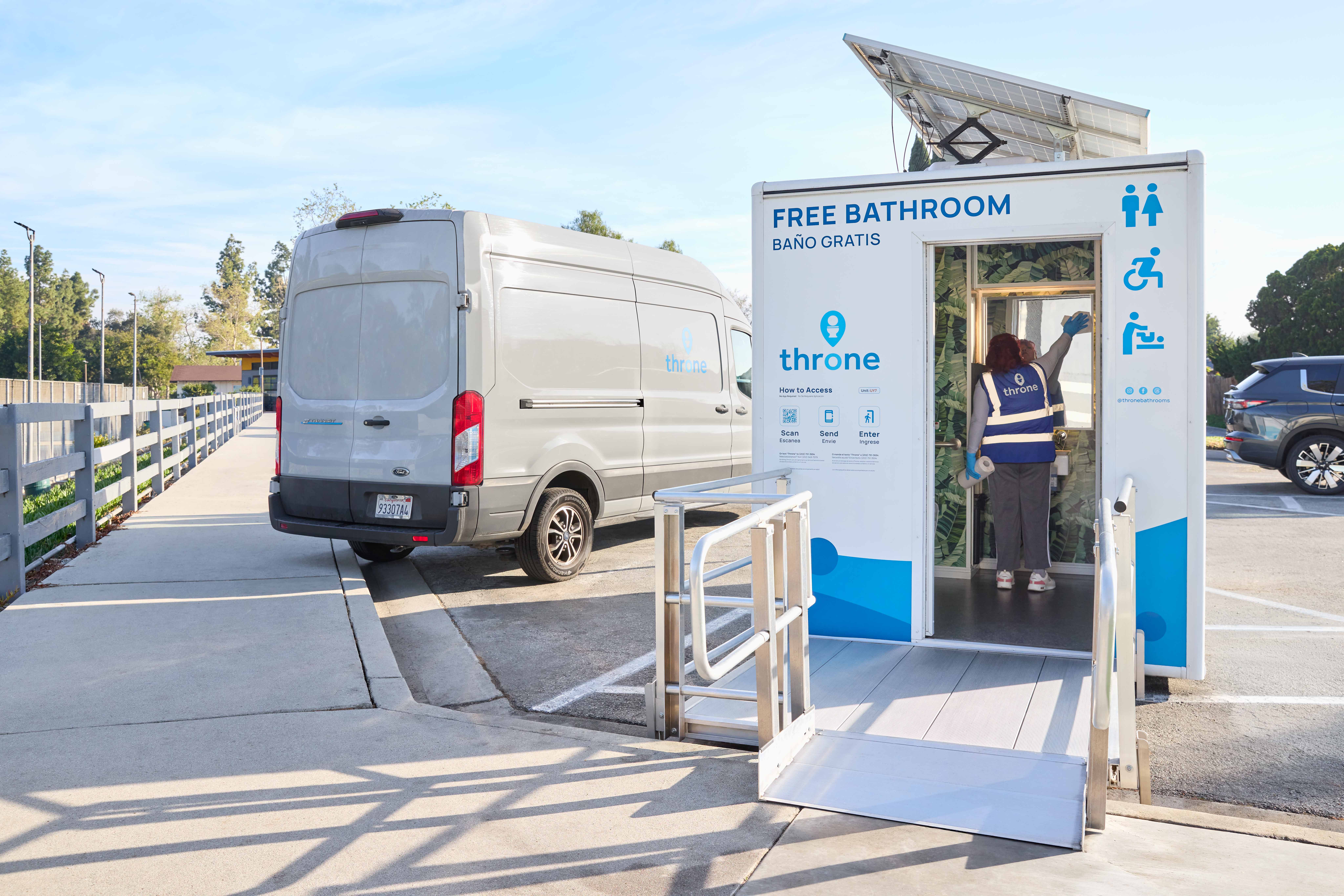
Just a few weeks after we deployed a Throne in Seattle’s Pioneer Square, someone broke one of its windows. A community member notified us of the damage at 8:14 pm Sunday, and by Monday at 2:16 pm the window was replaced and the unit back in service. Our rapid response didn’t allow any time for additional vandalism to occur.
3. Increase in-person 'walk-bys'
"The old-school way of creating a sense of accountability was to have somebody sitting outside the restroom until the person emerges. But it's incredibly expensive, and actually a reason why most restrooms don't get built." —Jess Heinzelman, Throne’s Co-founder & COO
Hiring full-time attendants to sit outside restrooms isn’t practical for most cities, but sometimes in-person monitoring is necessary to keep the area safe and free of vandalism.
Instead of hiring a dedicated staff person, consider assigning staff or officers who are in the areas to periodically check on the restroom. Even an occasional walk-by helps prevent misuse.
4. Promote social and community accountability
Sometimes the strongest accountability comes from the neighbors, park-goers, and commuters who use a restroom everyday. They invoke a sense of informal ownership over the space, which acts like a form of protection against misuse. They’re also more likely to report issues when they see them.
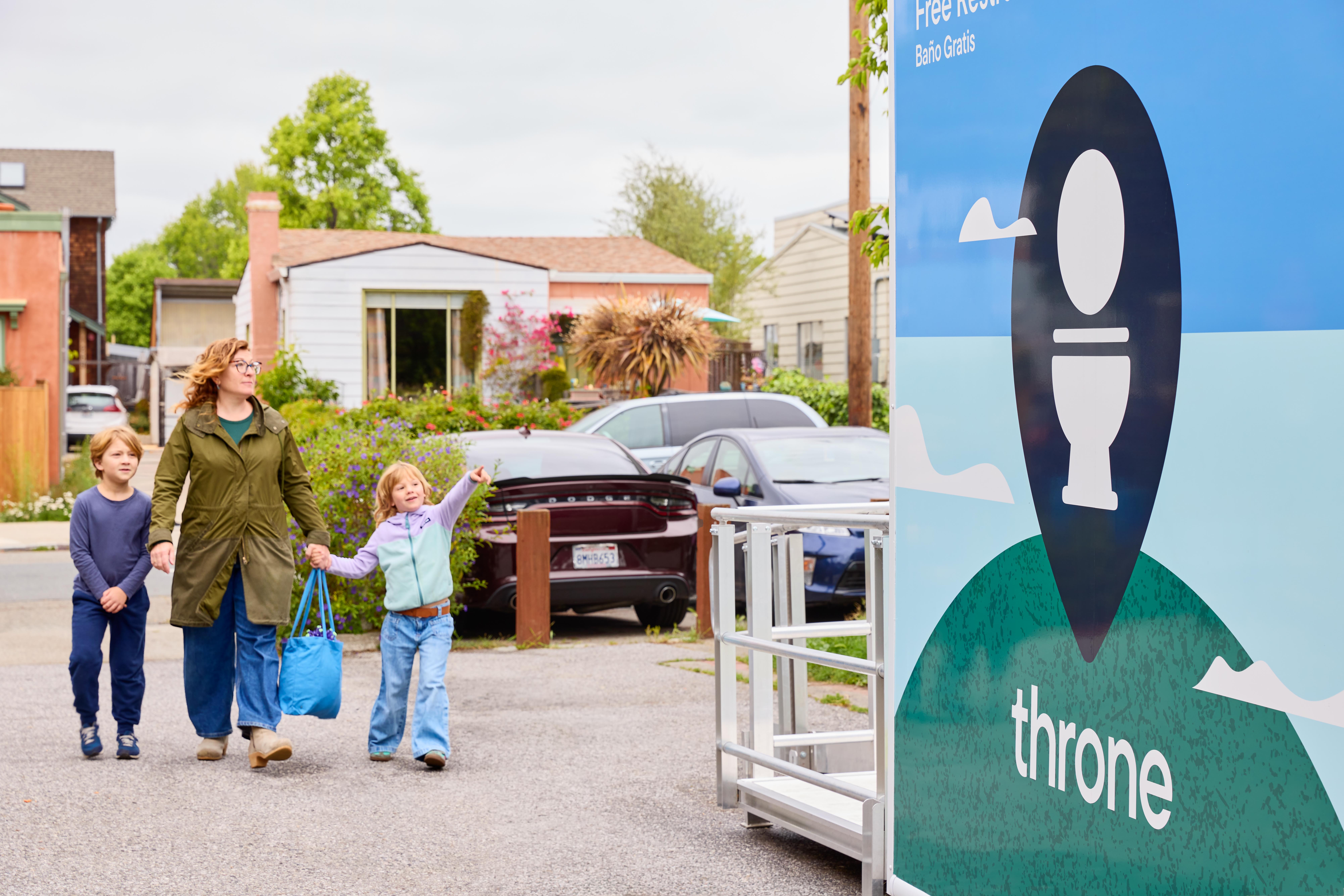
“The ownership and care taken by some communities is surprising. From Maryland to Los Angeles, we’ve seen groups of people unconnected to Throne making efforts to ensure it remains in great condition, educate others and dissuade misuse. Often they are regulars at the location where the Throne has been placed. In particular bus drivers, we've seen them make their own additions to the Throne to enhance it and even adding a magazine holder complete with reading material.” —Shyanne Telfer, VP of Product, Throne Labs
5. Consider data-backed interventions
We analyzed usage data from the Thrones in the LA market and found that misuse and vandalism aren’t as widespread as people think. Misuse is concentrated to a few trouble locations, and the problems at those locations are actually quite different.
Not every restroom has the same problem, which means solutions shouldn’t look the same either. Locating problem hotspots and identifying the extent of those problems are the first steps to developing targeted solutions. When cities do that, managing public restrooms becomes more efficient. Don’t have the data yet? Start gathering feedback in simple ways, whether that’s a phone number people can call or text or a regular survey you send out to your email list. Trust us, people will always tell you what could be better if you ask.
With our data, we can tailor interventions to specific locations. For example, if we’re seeing high overstay rates at one location, we might shorten the time limit, increase the number of alerts, or up the volume of the overhead music to nudge users along. When we applied some of these interventions to a problem location, we saw a 92% reduction in overstays within the next week.
"Because there is no attendant in the restroom 24/7, everything is done remotely. Users get warnings when they’re halfway through the 10 minute limit and once it’s coming up to the end. Once that time limit is up, the door will open. In a regular bathroom, this isn't going to happen. People can lock themselves in and stay until somebody prompts them to leave." —Casey Shea, Los Angeles Operations Manager, Throne Labs
A public good worth protecting
When a restroom is well-lit, well-kept, and clearly cared for, most people will treat it with respect. Vandalism is mostly a crime of opportunity, but with intentional design, consistent maintenance, and a few extra eyes, cities can reduce the temptation to make bad choices and keep people accountable to do the right thing.
Continue reading: What our data says about public restroom loitering