Why nicer restrooms get vandalized less
Written by: Beth D'Arcy
When a space treats people well, most people return the favor.
What do prison cells and public restrooms have in common? If you’re picturing stainless steel toilets, cinderblock walls, and the unmistakable shade of institutional beige, you’re on the right track.
For many budget-conscious cities, these design choices make sense on paper. City officials assume public restrooms are magnets for vandalism, so they use materials that are hard to break and cheap to fix to keep long-term maintenance costs down.
But what if public restrooms could look nice and deter vandalism? Research shows – and our restrooms prove – that it’s possible.
What an indestructible restroom actually attracts
"There’s a common misconception that to keep restrooms nice, they need to be indestructible or ugly or prison-like. What this ends up creating is an environment that people don’t feel they need to care for.” —Jess Heinzelman, Co-founder & COO, Throne Labs
Vandalism is a complex issue, and there’s no perfect design or material that will stop it from happening. But environmental design theories, like Crime Prevention Through Environmental Design (CPTED), prove that certain design elements influence how people behave in a space – and even deter bad behavior.
Everything from wall color to cleanliness levels can subconsciously change a person’s thoughts, feelings, and ultimately, actions. Certain architectural features, like clear pathways, targeted lighting, and visible entryways, are natural deterrence signals that make vandalism less appealing.
.jpg)
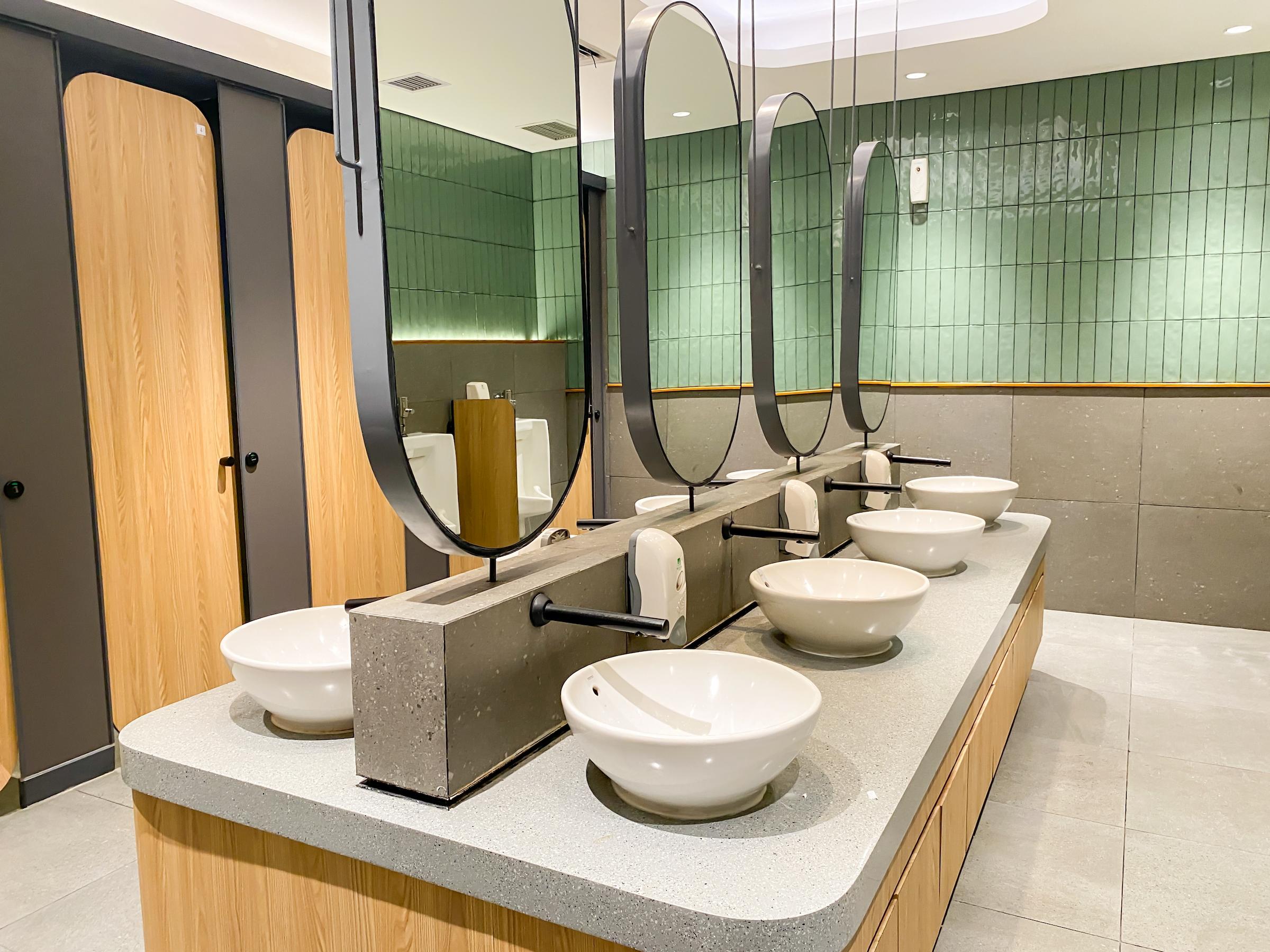
Aesthetic design choices, like overhead music and natural building materials, subconsciously reduce stress levels and make bad behavior feel out of place.
But the opposite is true too. Broken windows and poor lighting invite more vandalism because there’s a sense that no one really cares about the space anyway.
Public restrooms designed for damage control – not the human experience – have a similar effect. Indestructible toilets and patchy walls assume the user is going to abuse the space, and people immediately pick up on this lack of trust.
When a space is visibly cared-for and intentionally designed with the user in mind, people feel a sense of informal ownership and are less likely to abuse it.
Our gamble on porcelain toilets
But the reality is that most design decisions come down to what’s practical. For budget-conscious cities, installing fixtures that can withstand heavy use and occasional misuse is the smart move.
Before launching Throne, we’d heard horror stories about smashed toilets and urinals in public restrooms. There was even a social media trend of people breaking them on camera. Incidents like these eat away at budgets and can take a public restroom offline for months.
As we were designing the first Throne, we thought about jumping straight to stainless steel to avoid replacement costs altogether, but decided to try porcelain first – for a few reasons.

First, the cost. The porcelain model we use costs three times less than stainless steel, so if one broke, our modular design strategy would allow us to replace it several times over. If smashed toilets truly became a problem, we could switch to stainless.
But the primary reason is that a porcelain toilet gives people something stainless steel never could: a comfortable and dignified restroom experience that’s worth taking care of.
People take care of places that take care of them
If cold, industrial design can signal distrust and invite vandalism, the reverse is just as true. A restroom that feels welcoming – even delightful – invites people to treat it with care.
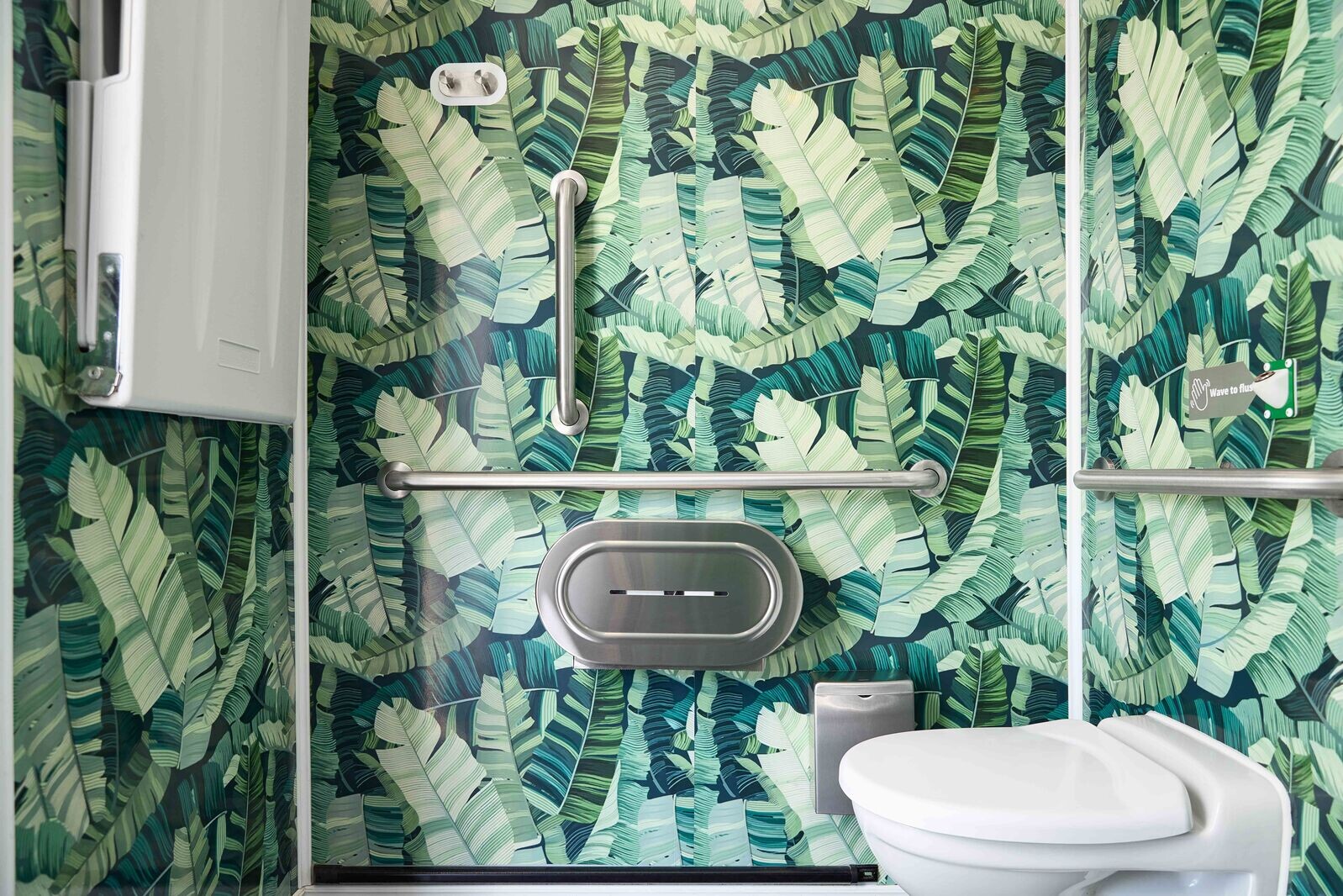
So we designed our restroom for exactly that. Overhead music, graffiti-resistant botanical wall stickers, frequent cleanings, good lighting, and yes – porcelain toilets – create a space worth protecting.
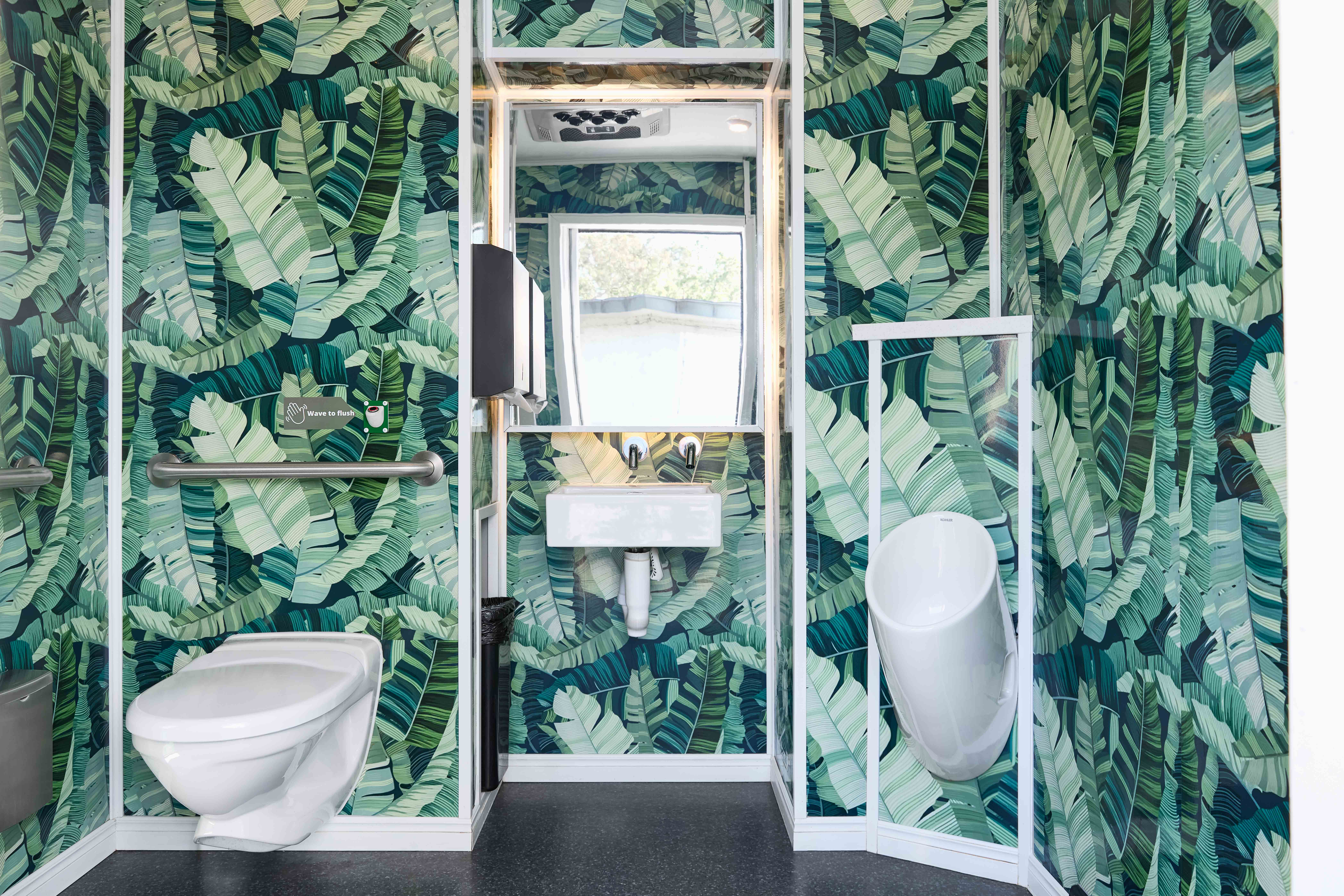
Most people think public restrooms and vandalism go hand-in-hand, but we’ve found that far more people want to protect these spaces than vandalize them. With an average cleanliness score of 4.1/5 across 100+ Thrones and a 91% satisfaction rate, we’re proof that people take care of nice spaces.
"What actually tends to happen is we see this feeling of ownership within the community – even with our unhoused neighbors. They want access to this restroom, and they want to make sure they don't lose it." —Casey Shea, Los Angeles Operations Manager, Throne Labs
This holds true even at LA Metro’s Westlake MacArthur Park Station – one of Throne’s most challenging locations for loitering. During their 4-month pilot, nine out of ten people never approached the time limit, and of the 5.6% who did, most left after a single reminder. Fewer than 1% required restricted access for repeat offenses. This goes to show that when given a clean and dignified restroom, most people will use it responsibly.
Read more: What our data says about restroom loitering
3 tips to design public restrooms for people, not damage control
We took a gamble on people-first design, and it turns out public restrooms can be both delightful and durable. The same choices that make a restroom worth using are what deter people from damaging it.
From our experience, here’s how to design a public restroom that protects itself:
- Build in a sense of ownership. Place restrooms where people can see and rely on them everyday. When a restroom feels like it belongs to a neighborhood, neighbors start treating the space as theirs.
- Choose materials that signal the space is valued. Quality finishes, like patterned walls, warm lighting, and natural materials, tell people the restroom was built on purpose, not to check a box. Institutional patch-jobs and bare steel send the message that neither the space nor the person using it is worth the effort.
- Make people think twice about vandalism. Details like textured walls that resist graffiti, lighting that removes anonymity, or music that discourages loitering, are small frictions that make loitering less comfortable and acts of vandalism less appealing. Each one raises the effort of misuse without making the space feel hostile.
Continue reading: How to prevent public restroom misuse when no one’s watching