How a 10-minute limit–and a bit of music–means better restroom access for everyone
Written by: Jessica Heinzelman, Co-Founder & COO at Throne Labs
One common concern we hear from cities considering public restrooms is this: "What about loitering? Won't people just camp out inside?"
It's a legitimate question. Traditional public restrooms often become monopolized by a single person, making them effectively unusable for everyone else. Beyond the inconvenience of an occupied restroom, extended occupancy can signal unsafe conditions to community members, discouraging use even when facilities eventually become available. This creates a cycle where public restrooms fail to serve their intended purpose.
At Throne, we've developed a system that addresses this challenge head-on, using a combination of behavioral science, smart technology, and clear communication to keep restrooms available while maintaining dignity for all users.
“Wait, is 10 minutes really enough?”
For most people using a public restroom, it is. Across the Throne network, 81% of users complete their visit in under 5 minutes. Sure, many of us might escape to the bathroom at home for a few extended moments of peace with our phones, but that behavior doesn't typically carry over to public facilities. People want to get in, take care of business, and get out.
The data does vary by location type. At events with long lines, usage patterns are quick and straightforward. In busy commercial areas and recreational parks where people gather, hang out, and play, we see slightly longer average durations. And at our most challenging location in downtown Los Angeles, directly across from a homeless encampment, the times are noticeably longer, but over 95% of users still complete their visits within the 10-minute timeframe.
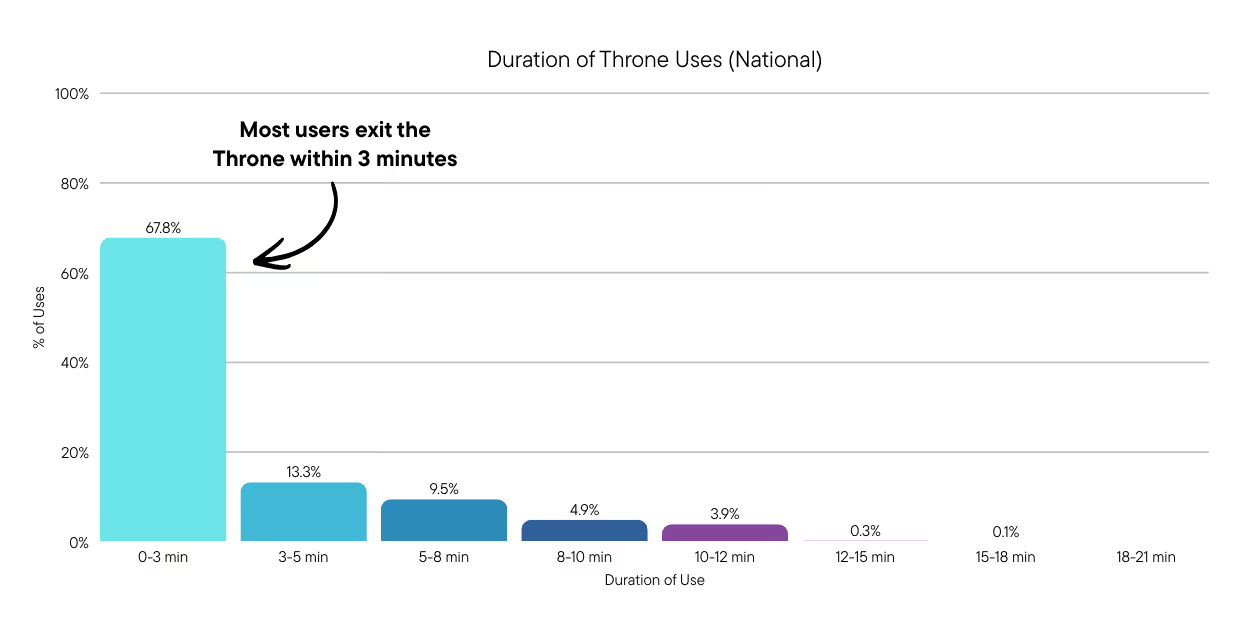
The key is addressing the small percentage of uses that do exceed reasonable limits, without creating barriers for people who genuinely need a restroom.
Music that moves people
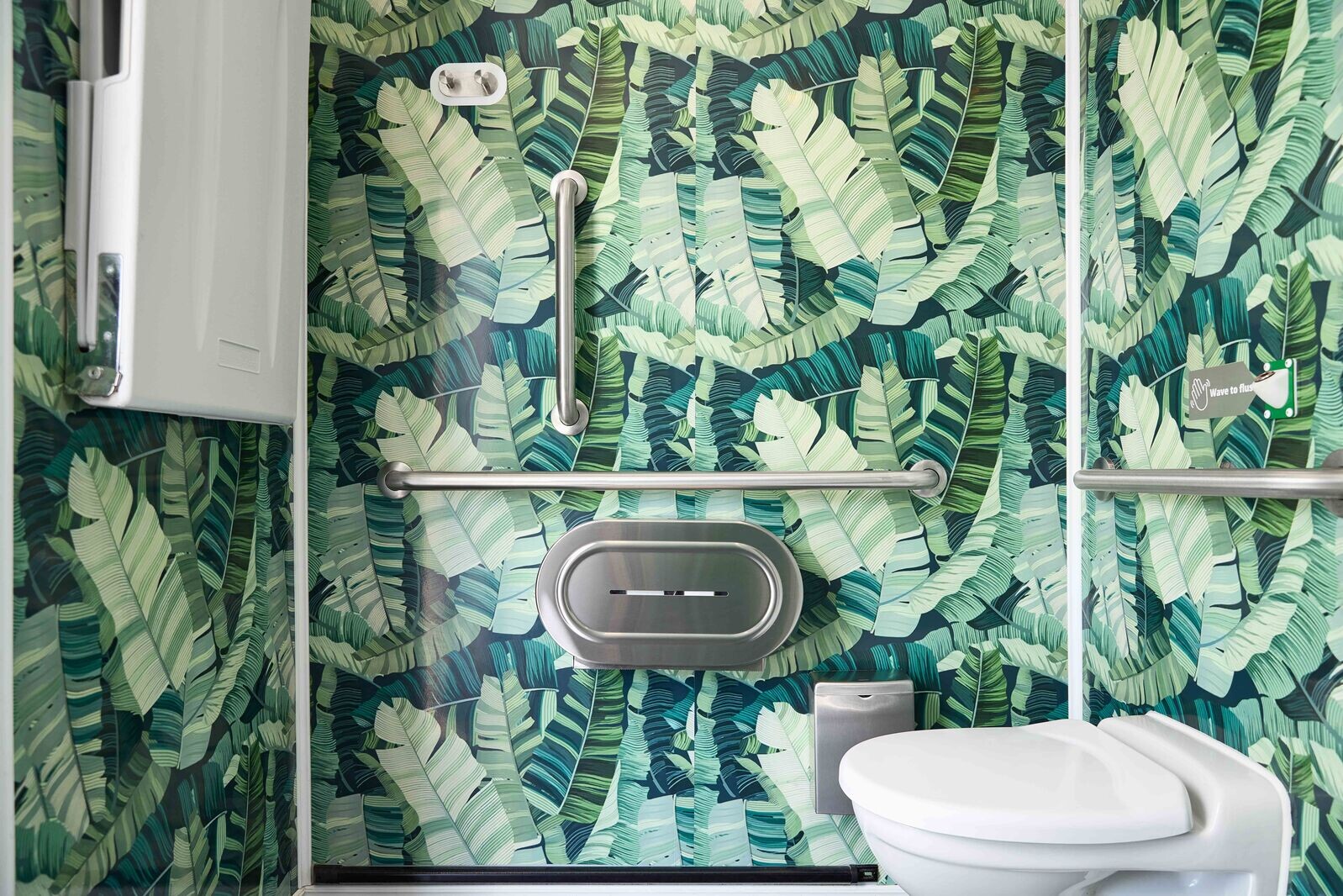
Upon entering a Throne, users are welcomed into an environment that is designed to feel pleasant and private for a quick visit. That’s where the music comes in. It creates a comfortable atmosphere and contributes to a sense of privacy. However, it has another benefit: behavioral science research shows this type of ambient music also subtly encourages people to keep moving. It's the same principle that 7-Eleven, transit agencies and others have used successfully to deter loitering in stores and public spaces.
Creating an environment that naturally encourages people to move along doesn't require harsh measures. Our strategically curated audio creates a welcoming environment for legitimate use while discouraging extended stays.
Three reminders, zero surprises
While our soundtrack and 10-minute limit discourages extended stays, we never want to catch anyone off guard or create more anxiety about using a public restroom. That's why our audio also includes reminders along the way, giving users plenty of time to wrap up their visit with dignity. Our graduated system of reminders keeps people informed without making them feel unwelcome:
- At 5 minutes: A friendly voice interrupts the music to let users know they're halfway through their allotted time.
- At 8 minutes: Another reminder plays, letting users know time is almost up and gently reminding them that the door will open at the 10-minute mark.
- At 10 minutes: Lights begin flashing and the audio message becomes more urgent, clearly stating that time is up, the user needs to leave, and the door will open shortly.
- At 10 minutes and 30 seconds: The door opens while the lights and audio continue until the user exits.
One location that puts Throne loitering to the test is LA Metro’s Westlake MacArthur Park Station, where they chose to pilot Throne. If it could serve this community well, they would be confident it could support other stations. The results spoke for themselves. Only 5.6% of users reached the 10-minute mark, and of those who did, the vast majority left quickly once reminded. Just 0.7% of users required restricted access due to repeat offenses. Even in one of LA's most challenging locations, our graduated reminder system struck the right balance—clear boundaries that respect human dignity while keeping restrooms available for everyone who needs them.
How we handle overstays (and why it rarely happens twice)
When someone stays beyond 11 minutes, they receive a text message or app notification explaining that their use was associated with an overstay. The message makes it clear that repeated incidents could result in restricted access to the Throne network.
The data shows this approach works. On average, we've had to restrict access for a very small percentage of users: 0.2%. Even at the toughest locations, restrictions remain minimal. The majority of people who receive a warning message do not reoffend.
Does it really work? Here's the data
How do we know this solution really works? We look to our communities. In Long Beach, California, where loitering in restrooms had been a significant downtown challenge, the city wanted to specifically test whether Throne's anti-loitering technology could address safety concerns. During their 4-month pilot:
- 100% of users vacated within 15 minutes
- 70% decrease in public defecation within a half-mile radius of Thrones
- 82% of survey respondents felt Throne was safer than traditional public restrooms
These results demonstrate that when you combine accessible, clean facilities with effective time-management systems, you can dramatically improve public health and safety outcomes.
The work ahead: Extended time for those who need it
We recognize that our 10-minute limit, while appropriate for most users, may pose challenges for some people with disabilities who require additional time due to mobility issues. Access is at the core of our mission, and we're actively working with members of the disability community to develop solutions that enable extended time for those that need it.
We're exploring systems that would tag accounts for extra time, potentially through verification via transit disability cards, DMV placards, or partnerships with service and advocacy organizations. The challenge is reaching the right people with these accommodations without putting Throne in the position of determining who is "deserving” and who is not. We're committed to finding the right partners and processes to ensure everyone who needs a restroom can access one with dignity and plan to roll out the first tests mid-2026.
Public restrooms that work for everyone
Anti-loitering technology isn't about keeping people out. It's about keeping restrooms available and welcoming for everyone who needs them. When a single person occupies a restroom for hours, that facility serves one person. When the same restroom serves 50 people in a day because it remains available and clean, that's transformational for community access.
Cities invest in public restroom infrastructure to serve their communities. Our anti-loitering system ensures that investment delivers on its promise: clean, safe, accessible bathrooms when people need them.
By combining smart technology with respectful communication and behavioral science, we're proving that it's possible to maintain both access and safety in public spaces. Throne's anti-loitering system makes public restrooms work the way they should: available, clean, and serving everyone.